
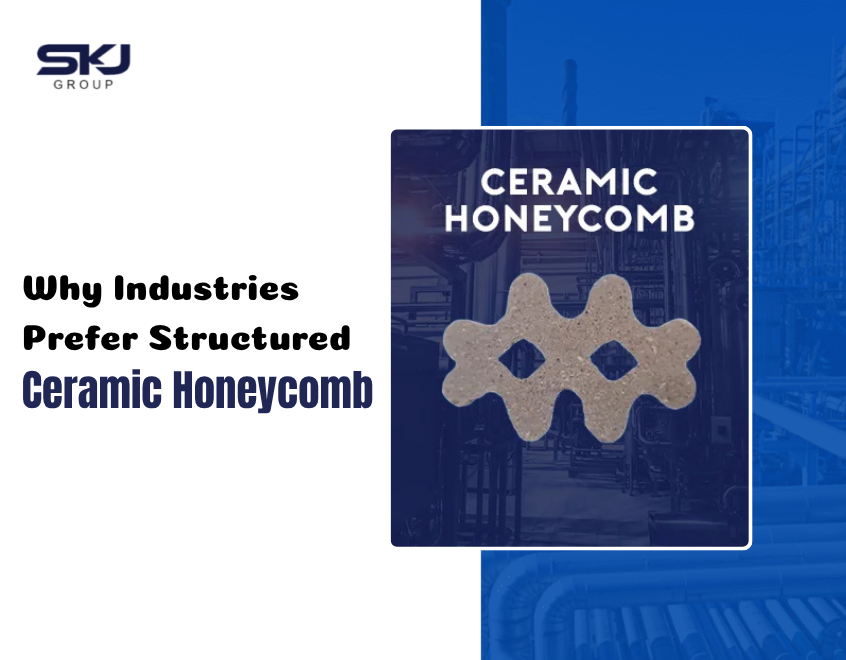
IIndustries today face constant pressure to improve efficiency, reduce emissions, and lower operational costs. That’s why many manufacturers now prefer ceramic honeycomb as their trusted solution. Known for its thermal stability, durability, and high surface area, ceramic honeycomb improves performance in demanding systems. This guide explains why industries rely on it, how it works, and what benefits it offers across applications. You’ll also learn how to choose the right ceramic honeycomb manufacturer or supplier. Let’s explore why this material has become a top choice worldwide.
What Is Ceramic Honeycomb and Why Does It Matter?
Ceramic honeycomb is a structured material made from high-temperature ceramics arranged in a grid-like honeycomb design. The structure provides high surface area, low pressure drop, and excellent heat resistance.
Key Advantages:
- Strong thermal shock resistance
- High mechanical strength
- Efficient gas distribution
- Lightweight yet durable
- Supports catalytic reactions
- Enables energy savings
These features explain why many companies rely on ceramic honeycomb for emissions control, heat exchange, chemical reactions, and filtration systems.
Why Do Industries Prefer Ceramic Honeycomb Over Other Support Materials?
Ceramic honeycomb is engineered for applications where temperatures peak and stability is essential. Its micro-channel design provides a larger contact surface for reactions while allowing gases to flow smoothly.
Benefits for Industrial Efficiency
- Faster heat transfer
- Higher catalytic activity
- Lower pressure and energy loss
- Reduced operational cost
For industries that run at extreme temperatures or require precise reaction environments, these benefits are essential.
Where Is Ceramic Honeycomb Used Across Industries?
Ceramic honeycomb supports a wide range of industrial systems. Here are the most common uses:
Industrial Applications:
- SCR (Selective Catalytic Reduction) Systems: Reduces NOx emissions in power plants.
- RTOs (Regenerative Thermal Oxidizers): Controls industrial VOC emissions.
- Automotive Catalysts: Used in diesel and gasoline catalytic converters.
- Chemical Processing: Acts as catalyst support in high-temp reactions.
- Petrochemicals: Supports desulfurization and refinery gas treatments.
- Heat Exchange Systems: Improves energy efficiency.
- Air Purification: Captures and oxidizes harmful gases.
If you are working with high-temperature gases, chemical processes, or emissions control, ceramic honeycomb is one of the most reliable materials available.
What Are the Main Benefits of Using Ceramic Honeycomb?
Here are the advantages that industrial buyers value most:
1. High Temperature Resistance
Ceramic honeycomb performs reliably even at temperatures above 1000°C.
2. Chemical Durability
It withstands corrosive gases, acid vapors, and chemical exposure.
3. Maximum Surface Area
More surface area means more catalytic reaction and better efficiency.
4. Lower Pressure Drop
The smooth honeycomb channels reduce airflow resistance.
5. Long Service Life
Its material structure allows extended operation with minimal breakdown.
6. Operational Cost Savings
Reduced energy loss and improved reaction efficiency lower long-term cost.
7. Environmental Compliance
Essential for meeting strict emission regulations.
These benefits explain why industries increasingly prefer ceramic honeycomb over older support systems.
How to Choose the Right Ceramic Honeycomb Manufacturer or Supplier?
Choosing the right supplier is critical for durability and performance. Here are the criteria to consider:
Key Selection Factors:
- Material Quality: Look for high-purity cordierite or alumina-based honeycomb.
- Cell Density Options: Check availability of 100–600 CPSI (cells per square inch).
- Thermal Shock Performance: The product should withstand rapid temperature changes.
- Manufacturing Standards: ISO-certified manufacturing ensures quality.
- Customization Options: Dimensions, coatings, and shapes should be customizable.
- Industry Reputation: Evaluate case studies, testimonials, and client portfolio.
- Technical Support: Reliable suppliers offer engineering support and product guidance.
What Are the Different Types of Ceramic Honeycomb Available?
Ceramic honeycomb components vary based on material type and channel density.
Common Material Types:
- Cordierite Honeycomb: Best for thermal shock resistance.
- Alumina Honeycomb: High mechanical strength for extreme heat.
- Silicon Carbide (SiC) Honeycomb: Superior thermal conductivity.
Cell Density Options:
- 100–200 CPSI: Used for high-flow systems.
- 300–400 CPSI: Common in industrial catalysts.
- 500–600 CPSI: Used in advanced catalytic converters.
Selecting the right combination depends on industry needs and operational environment.
How Does Ceramic Honeycomb Improve Emission Control?
Environmental regulations are tighter than ever. Ceramic honeycomb helps industries meet emission standards efficiently.
Benefits in Emission Control:
- Removes NOx gases
- Reduces volatile organic compounds (VOCs)
- Enhances catalytic reaction speed
- Supports green manufacturing
Industries aim to meet global environmental standards, and ceramic honeycomb is one of the simplest ways to achieve compliance.
How to Select the Best Ceramic Honeycomb for Your System
Here is a simple guide to help you choose the right product:
1. Identify Application Requirements
Determine temperature, gas composition, flow rate, and catalytic load.
2. Choose the Right Material
Cordierite, alumina, and SiC offer different benefits.
3. Match Cell Density to System Flow
Lower CPSI for high flow, higher CPSI for better catalytic efficiency.
4. Consider Structural Strength
Look for honeycomb blocks with uniform cell walls.
5. Evaluate Supplier Reliability
Work only with reputable manufacturers.
6. Look for Custom Manufacturing Options
Customized shapes and coatings enhance system performance.
FAQ’s About Ceramic Honeycomb
What is ceramic honeycomb used for?
It is used in catalytic converters, emission control systems, chemical processing, heat exchangers, and air purification units.
Why is ceramic honeycomb popular in industrial applications?
Its high surface area, thermal stability, and low pressure drop make it ideal for high-temperature and high-efficiency processes.
How long does ceramic honeycomb last?
With proper installation, it can last several years due to its thermal and chemical durability.
What materials are used to make ceramic honeycomb?
Common materials include cordierite, alumina, and silicon carbide.
Is ceramic honeycomb safe for high-temperature operations?
Yes. It is specifically engineered to withstand extreme heat.
Key Takeaways
- Ceramic honeycomb offers superior thermal stability and efficiency.
- It is widely used in chemical reactors, emission control systems, and heat exchange units.
- Industries prefer ceramic honeycomb for its durability, cost-effectiveness, and environmental benefits.
- Choosing the right ceramic honeycomb manufacturer or distributor ensures long-term performance.
- Material type, cell density, and design should match specific application needs.
Conclusion
Ceramic honeycomb is more than just a structured ceramic block. It is a high-performance solution that helps industries achieve cleaner emissions, faster reactions, and long-term system reliability. Choosing the right product from a trusted ceramic honeycomb supplier USA or distributor ensures you get consistent quality and maximum efficiency.
If you want to explore more industrial materials, need guidance selecting the right ceramic honeycomb, or are looking for a reliable supplier, now is the perfect time to take the next step.
