
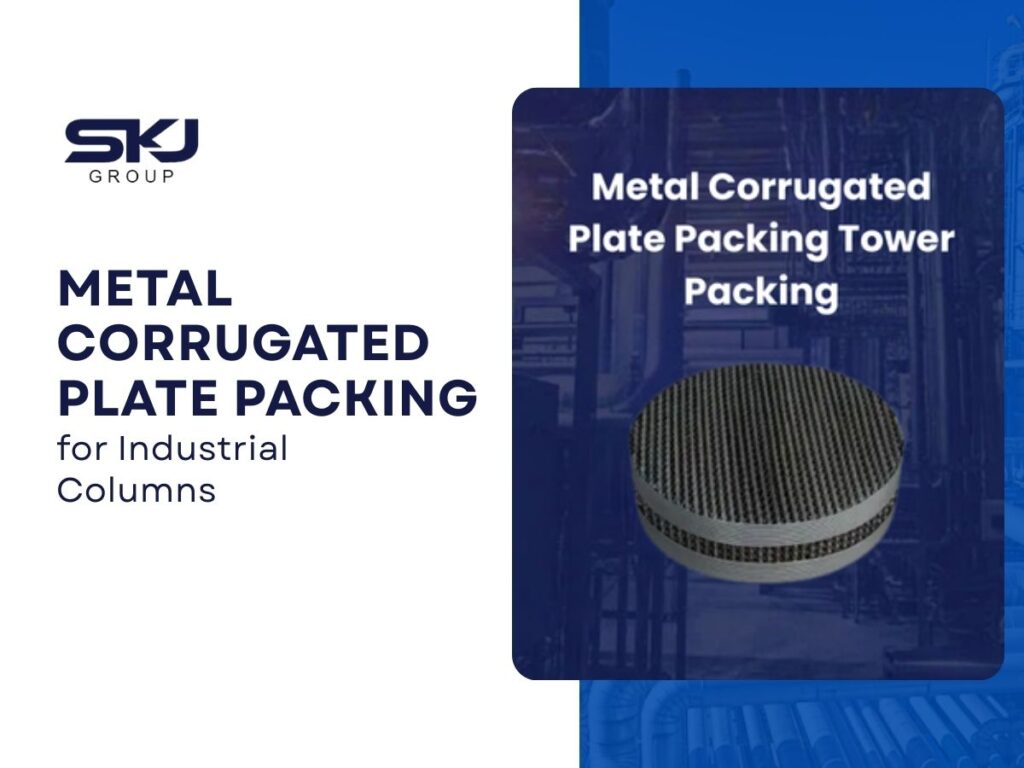
A petroleum refinery in Texas faced a critical challenge in 2024 when its distillation column efficiency dropped to 72%, causing significant product quality issues and energy waste. After retrofitting with a metal corrugated plate packing tower for distillation columns from a certified Metal Corrugated Plate Tower Packing manufacturer, they achieved 94% separation efficiency within 60 days while reducing energy consumption by 31%. This dramatic improvement demonstrates why industries worldwide are upgrading to advanced structured column internals for enhanced mass transfer performance.
Metal Corrugated Plate Packing Tower in the USA represents cutting-edge technology in industrial separation processes, delivering exceptional efficiency for distillation, absorption, and extraction operations. Unlike traditional random packing, this high-efficiency mass transfer packing provides uniform vapor-liquid distribution, reduced pressure drop, and superior capacity. As chemical processing plants, refineries, and petrochemical facilities demand greater operational efficiency, understanding corrugated metal structured packing for absorption towers becomes essential for maintaining a competitive advantage.
Understanding Metal Corrugated Plate Packing Technology
Metal Corrugated Plate Packing Tower Packing USA consists of thin corrugated metal sheets arranged in a specific geometric pattern to create structured channels for vapor and liquid flow. The manufacturing process involves precision forming of stainless steel, carbon steel, or specialty alloys into corrugated sheets with angles typically ranging from 30 to 60 degrees.
These vapor-liquid contact packing elements are stacked in alternating orientations, creating a three-dimensional network of flow channels. The corrugated design forces vapor and liquid into intimate contact while maintaining low resistance to flow, resulting in exceptional mass transfer efficiency.
Key structural characteristics include:
- Material construction: Stainless steel 304/316, carbon steel, titanium, or specialty alloys
- Corrugation angle: 30°, 45°, or 60° depending on application requirements
- Surface area: 100-500 m²/m³ for optimal vapor-liquid contact
- Void fraction: 90-98% providing high capacity and low pressure drop
- Sheet thickness: 0.1-0.5 mm optimized for strength and mass transfer
The geometric precision of the Metal Corrugated Plate Packing Tower for distillation ensures consistent performance across the entire column diameter. Unlike random packing, which can experience channeling and maldistribution, structured packing maintains uniform flow patterns that maximize separation efficiency.
High-efficiency metal packing for chemical towers utilizes advanced surface treatments to enhance wettability. These treatments ensure complete liquid spreading across the packing surface, increasing the effective mass transfer area and improving overall column performance.
Applications in Distillation and Separation Processes
Metal corrugated plate packing for mass transfer columns serves critical roles across the petroleum refining, chemical manufacturing, and gas processing industries. The technology excels in applications requiring high separation efficiency, low pressure drop, or both simultaneously.
Petroleum refineries deploy metal corrugated plate packing towers for distillation columns in crude oil fractionation, vacuum distillation, and product purification services. The packing’s ability to handle high liquid and vapor loads while maintaining low pressure drop makes it ideal for maximizing throughput in existing columns.
Chemical processing applications include:
- Aromatic separation: Benzene, toluene, and xylene purification to 99.9% purity
- Solvent recovery: Efficient separation of process solvents for reuse
- Fine chemical distillation: High-purity pharmaceutical intermediate production
- Cryogenic separation: Air separation and natural gas processing at low temperatures
Corrugated metal structured packing for absorption towers provides exceptional performance in gas treating operations. Natural gas processing facilities use this technology to remove acid gases, achieving outlet specifications of less than 4 ppm H₂S. The low-pressure drop tower packing design minimizes compression energy requirements, reducing operational costs significantly.
Environmental control applications benefit from industrial metal corrugated plate packing tower supplier solutions. Scrubber systems using structured packing achieve 95-99% removal efficiency for volatile organic compounds (VOCs), sulfur dioxide, and other pollutants while operating at lower pressure drops than traditional technologies.
Performance Advantages and Efficiency Benefits
High-efficiency metal corrugated plate packing for absorption towers delivers measurable performance improvements over conventional random packing and older structured packing designs. The optimized geometry creates numerous benefits that directly impact column economics.
Mass transfer efficiency improvements stem from the packing’s ability to generate small liquid droplets and thin films. The corrugated channels create turbulence that continuously renews the vapor-liquid interface, accelerating component transfer rates. This results in higher separation factors and reduced theoretical stage requirements.
Pressure drop reduction represents a critical advantage for existing columns. Low-pressure drop metal structured packing tower designs operate at 30-50% lower pressure drop compared to random packing of equivalent separation efficiency. This reduction directly translates to lower energy consumption for compression or vacuum generation.
Capacity advantages include:
- Vapor handling: 20-40% higher capacity compared to random packing
- Liquid handling: Improved distribution prevents flooding at high rates
- Turndown ratio: Maintains efficiency at 30-100% of design capacity
- Fouling resistance: Open structure reduces plugging tendencies
Industrial structured packing tower solutions using metal corrugated plates demonstrate exceptional mechanical strength. The rigid structure resists crushing under column weight and maintains geometry during thermal cycling. This durability ensures consistent performance throughout extended service life.
Energy efficiency gains result from multiple factors. Lower pressure drop reduces compression power requirements. Higher efficiency allows operation at lower reflux ratios, decreasing reboiler heat duty. A typical refinery distillation column retrofitted with corrugated metal plate packing for chemical processing plants achieves 20-35% energy savings while improving product purity.
Material Selection and Corrosion Resistance
Metal Corrugated Plate Packing Tower Packing manufacturer’s expertise includes selecting appropriate materials for diverse chemical environments. Material choice directly impacts packing longevity, maintenance requirements, and total cost of ownership.
Stainless steel 304 provides excellent corrosion resistance for most hydrocarbon services and many aqueous applications. The alloy resists chloride stress corrosion cracking up to 60°C and handles pH ranges from 4-10 effectively. Cost-effectiveness makes it the standard choice for petroleum refining applications.
Stainless steel 316/316L offers enhanced corrosion resistance in more aggressive environments. The molybdenum addition improves resistance to chlorides, sulfuric acid, and organic acids. Metal Corrugated Plate Packing Tower Packing exporter specifications frequently include 316L for pharmaceutical and fine chemical applications, where contamination prevention is critical.
Specialty materials for extreme conditions include:
- Titanium: Superior resistance to chlorides, seawater, and oxidizing acids
- Hastelloy C-276: Excellent performance in hydrochloric acid and chlorine service
- Monel 400: Resists hydrofluoric acid and alkaline conditions
- Carbon steel: Cost-effective for non-corrosive hydrocarbon applications
Surface treatment options enhance performance beyond base material properties. Industrial separation packing may incorporate coating technologies that improve wettability by 40-60%, increasing effective mass transfer area. Some treatments also provide additional corrosion protection in borderline service conditions.
Metal Corrugated Plate Packing Tower Packing Supplier quality control includes thorough material certification and testing. Mill test certificates verify composition, mechanical properties, and corrosion resistance. This documentation ensures compliance with industry standards and provides traceability for critical applications.
Installation Considerations and Best Practices
Proper installation of high-efficiency mass transfer packing directly impacts column performance and operational reliability. Metal Corrugated Plate Packing Tower Packing USA suppliers provide detailed installation guidelines that must be followed precisely to achieve design specifications.
Column preparation begins with thorough inspection and cleaning. Existing random packing, trays, or damaged components must be removed completely. Internal surfaces should be inspected for corrosion, erosion, or mechanical damage that could affect new packing performance.
Support systems require careful attention. The support grid must provide uniform load distribution while offering minimal resistance to vapor flow. Grid opening size should prevent packing penetration while maximizing open area. Most installations use support grids with 75-85% open area constructed from materials compatible with process conditions.
The installation sequence involves:
- Lower support installation: Ensuring level placement and secure attachment
- Packing element placement: Stacking layers with proper angular orientation
- Hold-down grid installation: Preventing packing movement during operation
- Liquid distributor installation: Positioning for optimal liquid distribution across the packing surface
- Vapor distributor verification: Ensuring uniform vapor entry if required
Liquid distribution quality determines actual versus theoretical packing performance. Industrial metal corrugated plate packing tower supplier recommendations specify liquid distribution density of 3-10 m²/m² of column cross-section. Inadequate distribution creates dry zones that significantly reduce separation efficiency.
Quality assurance during installation includes dimensional verification, alignment checks, and photography documentation. These records prove proper installation and provide baseline references for future inspections or troubleshooting.
Maintenance and Operational Optimization
Long-term performance of corrugated metal plate packing for chemical processing plants depends on proper operating practices and periodic maintenance. Understanding degradation mechanisms helps operators implement preventive measures that extend service life.
Operational monitoring should track key performance indicators, including pressure drop, separation efficiency, and capacity. Gradual pressure drop increases may indicate fouling, while sudden increases suggest mechanical issues like packing collapse or redistributor plugging.
Common operating challenges include:
- Fouling: Polymer formation, salt deposition, or particulate accumulation
- Liquid maldistribution: Redistributor plugging or damage affecting liquid spread
- Corrosion: Material degradation in aggressive chemical environments
- Mechanical damage: Packing crushing or distortion from thermal cycling
Cleaning strategies for low-pressure drop metal structured packing tower installations depend on fouling type. Water-soluble deposits may respond to hot water flushes, while polymeric fouling requires solvent cleaning. Some installations benefit from periodic chemical cleaning using caustic, acid, or proprietary solutions.
Inspection intervals should be established based on service severity and operating experience. Visual inspection during planned shutdowns reveals corrosion, mechanical damage, or fouling extent. Pressure drop monitoring provides a real-time indication of packing condition without requiring a shutdown.
Performance optimization techniques include adjusting operating parameters to maintain packing within design envelopes. Operating at excessive vapor or liquid rates can cause premature flooding, reduced efficiency, and accelerated mechanical wear.
Economic Benefits and Return on Investment
Investing in a Metal Corrugated Plate Packing Tower for distillation and absorption applications delivers quantifiable economic returns through multiple mechanisms. Understanding these benefits helps justify capital expenditures for new construction or retrofits.
Energy savings represent the most significant operating cost reduction. The combination of lower pressure drop and higher efficiency reduces utility consumption by 20-40% in typical applications. For a medium-sized refinery distillation unit, this translates to annual energy savings of $500,000-$1,500,000.
Capacity increases achieved through high-efficiency metal packing for chemical towers retrofits generate additional revenue without major capital investment. Many existing columns gain 15-30% throughput increase, effectively debottlenecking production without building new units.
Financial benefits include:
- Reduced energy costs: Lower reboiler duty and compression power
- Increased capacity: Higher throughput from existing assets
- Improved product quality: Better separation reduces off-specification production
- Lower maintenance costs: Durable construction extends service intervals
- Smaller equipment footprint: Higher efficiency allows smaller column designs for new projects
Payback periods for metal corrugated plate packing tower for distillation columns retrofits typically range from 1-3 years, depending on energy costs, capacity utilization, and product values. New column designs incorporating structured packing achieve 10-20% lower capital costs through reduced column height while maintaining separation performance.
Environmental benefits complement economic gains. Reduced energy consumption lowers greenhouse gas emissions, supporting corporate sustainability goals. Improved separation efficiency minimizes waste generation and product losses to purge streams.
FAQ’s About Metal Corrugated Plate Tower Packing USA
1. What makes metal corrugated plate packing more efficient than random packing?
Metal corrugated plate packing for mass transfer columns provides uniform vapor-liquid distribution and higher surface area per volume, achieving 30-50% better efficiency than random packing.
2. How long does metal structured packing typically last in industrial columns?
High efficiency metal corrugated plate packing for absorption towers typically lasts 10-15 years in non-corrosive service, with proper maintenance extending life to 20+ years.
3. Can existing columns be retrofitted with metal corrugated plate packing?
Yes, corrugated metal plate packing for chemical processing plants retrofits increase capacity commonly by 15-30% while reducing energy consumption by 20-40% in existing columns.
4. What is the pressure drop advantage of metal corrugated packing?
Low-pressure drop metal structured packing tower designs operate at 30-50% lower pressure drop compared to random packing, significantly reducing compression or vacuum power requirements.
5. Which industries benefit most from metal corrugated plate packing technology?
Petroleum refining, petrochemicals, natural gas processing, chemical manufacturing, and pharmaceutical production all benefit from industrial structured packing tower solutions for distillation and absorption.
6. How does metal corrugated packing handle fouling compared to random packing?
Metal Corrugated Plate Packing Tower Packing offers better fouling resistance due to open structure and smooth surfaces, though it requires proper liquid distribution to prevent localized deposits.
7. What factors determine the optimal corrugation angle for specific applications?
Application requirements for capacity, efficiency, and pressure drop determine angle selection. Industrial metal corrugated plate packing tower supplier engineers optimize the angle based on vapor-liquid loading and separation difficulty.
Conclusion: Advancing Industrial Separation Technology
Metal Corrugated Plate Packing Tower Packing represents proven technology for maximizing industrial column performance. The combination of high efficiency, low pressure drop, and operational reliability makes structured column internals the preferred choice for demanding separation applications.
As energy costs rise and environmental regulations tighten, upgrading to vapor-liquid contact packing technology delivers both economic and sustainability benefits. The documented performance improvements and rapid payback periods justify investment across the petroleum, chemical, and gas processing industries.
