
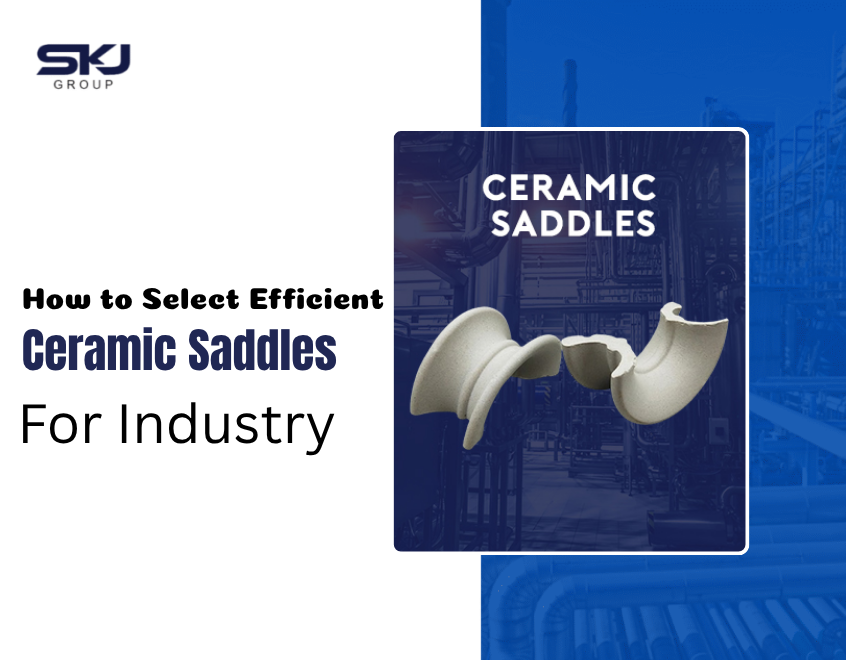
Selecting the right ceramic saddles for industrial systems is often more challenging than it seems. Many engineers and plant operators struggle with questions like how to improve mass transfer efficiency, how to reduce pressure drop, or which ceramic saddles manufacturer USA delivers the most reliable quality. The wrong choice can lead to frequent system breakdowns, reduced column performance, and higher operational costs.
This guide is designed to solve these pain points with clear, practical insights. You will learn exactly what to look for when choosing ceramic saddles, how different specifications affect performance, and how to evaluate a trusted ceramic saddles exporter or distributor in the USA. By the end of this article, you will understand which factors truly impact efficiency, durability, and long-term industrial reliability so you can make an informed decision with confidence.
What Are Ceramic Saddles and Why Are They Used?
Ceramic saddles are a type of random tower packing used in mass transfer operations such as absorption, distillation, scrubbing, and stripping. Their shape improves gas-liquid contact while maintaining low pressure drop.
Key Advantages
- High thermal resistance
- Mechanical strength
- Corrosion resistance
- Chemical stability
- Good liquid distribution
- Cost-effective for high-temperature processes
Industries using ceramic saddles include chemicals, petrochemicals, refineries, fertilizer plants, and environmental engineering.
How Do Ceramic Saddles Work in Packed Columns?
Ceramic saddles create a structured environment inside a tower where gas and liquid phases meet. Their curved shape increases flow paths and surface area, leading to better mass transfer.
The Working Principle
- Liquid flows downward across the ceramic surfaces.
- Gas flows upward and interacts with the film of liquid.
- Mass transfer occurs efficiently due to increased contact.
- Pressure drop remains low due to the saddle’s open structure.
What to Look for When Selecting the Best Ceramic Saddles?
This section answers the core question: How do you pick the most efficient ceramic saddles for industrial use?
1. Material Quality and Composition
High-purity ceramic material improves performance and durability.
What to Check
- Chemical composition
- Thermal expansion properties
- Resistance to acids, alkalis, and solvents
- Density and porosity
Low-quality ceramics may crack under thermal shock or chemical exposure.
2. Size and Geometry
Ceramic saddles are available in multiple sizes such as 25 mm, 38 mm, 50 mm, and 76 mm.
How to Choose the Right Size
- For high-flow applications: use larger sizes.
- For high mass-transfer efficiency: use smaller sizes.
- For corrosive, high-temperature operations: choose standardized sizes recommended by your distributor.
3. Surface Area and Void Ratio
Higher surface area improves contact, but too much density increases pressure drop.
Ideal Characteristics
- Balanced void space
- Uniform geometry
- Consistent surface roughness
4. Operating Temperature
Ceramic saddles perform well at temperatures where plastic packings fail. Industrial applications may require saddles that withstand over 1000°C.
5. Mechanical Strength
The saddles should resist impact, load, and compression stress.
Test for
- Compression strength
- Fracture resistance
- Attrition rate
6. Certification and Quality Standards
When dealing with a ceramic saddles manufacturer USA or ceramic ring manufacturer USA, confirm compliance with industry standards.
Ask for
- ISO certification
- Chemical analysis reports
- Mechanical testing data
How to Choose the Right Ceramic Saddles Manufacturer USA
Selecting a reliable manufacturer is essential for consistent quality.
Key Criteria
- Industry experience
- Quality control system
- Testing facilities
- Customization options
- Manufacturing capacity
Why This Matters
A strong manufacturer provides stable supply, better material consistency, and after-sales technical support.
How to Evaluate a Ceramic Saddles Exporter USA or Distributor USA
If you rely on exporters or distributors, evaluate them on:
1. Product Authenticity
Ensure they source from reputable manufacturers.
2. Technical Knowledge
A distributor must understand application requirements.
3. Delivery Reliability
Industrial downtime is expensive. Choose a distributor with a proven track record.
4. Packaging and Shipping Standards
Improper packaging can cause breakage during transport.
Common Mistakes Industries Make When Buying Ceramic Saddles
Avoid these pitfalls:
1. Choosing Low-Quality Ceramic
Cheaper saddles break easily and lead to downtime.
2. Not Matching Size with Application
Incorrect size reduces efficiency.
3. Ignoring Manufacturer Reputation
Always research the ceramic saddles manufacturer USA or exporter USA you plan to work with.
4. Overlooking Pressure Drop Requirements
High pressure drop increases operational cost.
FAQ’s About Ceramic Saddles
1. What size ceramic saddles are best for gas scrubbing?
Sizes between 38 mm and 50 mm are commonly preferred for balanced surface area and pressure drop.
2. Can ceramic saddles handle high-temperature applications?
Yes. High-purity ceramic saddles can withstand extremely high temperatures without deformation.
3. Do ceramic saddles outperform plastic or metal packings?
Ceramic saddles offer superior thermal and chemical stability but may be heavier than metal or plastic.
4. How long do ceramic saddles last?
With proper handling and correct installation, they can last many years due to their chemical resistance.
5. Are ceramic saddles suitable for acidic environments?
Yes. They are highly resistant to acids and corrosive chemicals.
Key Takeaways
- Ceramic saddles enhance mass transfer and reduce operational costs.
- Always evaluate material quality, geometry, size, and operating temperature.
- Work only with verified ceramic saddles manufacturers, exporters, and distributors in the USA.
- Match the saddle size to your process requirements.
- Test for physical strength and quality certifications.
Conclusion
Selecting efficient ceramic saddles is essential for any operation that depends on packed columns. By understanding material quality, geometry, thermal resistance, and manufacturer credibility, you can make an informed decision that improves performance, reduces downtime, and lowers operational cost. Use this guide to evaluate your options and choose only the best manufacturer, exporter, or distributor in the USA.
If you found this guide helpful, explore more content on industrial packing materials or contact us for expert recommendations tailored to your application.
