
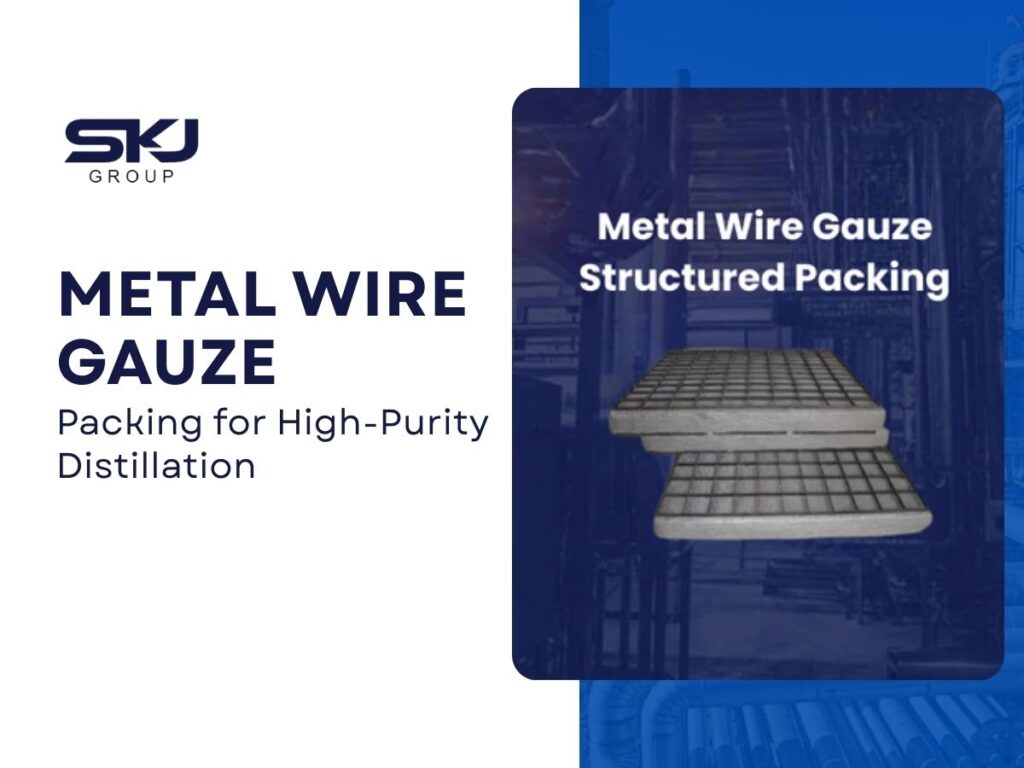
A pharmaceutical manufacturing facility in New Jersey struggled with achieving 99.95% purity requirements for critical solvent recovery in 2024, experiencing frequent batch rejections and costly rework. After implementing metal wire gauze packing for high efficiency distillation from a certified Metal Wire Gauze Packing manufacturer, they achieved consistent 99.98% purity within 45 days while reducing reflux ratio requirements by 28%. This breakthrough demonstrates why precision industries worldwide rely on high surface area wire gauze structured packing for the most demanding separation applications.
Metal Wire Gauze Packing USA represents the pinnacle of structured packing technology, delivering unmatched performance in applications requiring exceptional purity, low pressure drop, and consistent separation efficiency. Unlike conventional structured packing, this high-efficiency structured packing features precisely woven wire mesh that creates optimal vapor-liquid contact while maintaining minimal resistance to flow. As pharmaceutical, fine chemical, and specialty solvent producers face increasingly stringent quality standards, understanding precision column internals becomes critical for maintaining competitive advantage and regulatory compliance.
Understanding Metal Wire Gauze Packing Technology
Metal Wire Gauze Packing USA consists of finely woven wire mesh formed into corrugated structures that create an intricate network of vapor and liquid flow paths. The manufacturing process involves precision weaving of stainless steel or specialty alloy wires into mesh screens with openings ranging from 40 to 200 mesh, followed by corrugation and assembly into structured packing elements.
This vapor-liquid mass transfer media features wire diameters typically between 0.1 and 0.5 mm, creating exceptional surface area density. The woven construction provides structural rigidity while maintaining 95-98% void space, enabling high-capacity operation with minimal pressure drop. Each wire intersection creates a capillary junction that promotes liquid spreading and film formation.
Key technical specifications include:
- Mesh density: 40-200 mesh providing 200-800 m²/m³ surface area
- Wire material: Stainless steel 304/316L, Monel, Hastelloy, or titanium
- Void fraction: 95-98% for maximum capacity and low pressure drop
- Corrugation angle: 30-60 degrees optimized for application requirements
- Wire diameter: 0.1-0.5 mm, ensuring optimal liquid distribution
The geometric precision of metal wire gauze packing for distillation columns ensures exceptional liquid distribution characteristics. The woven mesh structure creates thousands of liquid distribution points per square meter, eliminating the maldistribution issues that plague less sophisticated packing designs.
Wire gauze structured packing for separation towers utilizes advanced surface chemistry to enhance wettability. The fine wire construction naturally promotes complete liquid spreading through capillary action, creating thin liquid films that maximize mass transfer rates. This characteristic makes it ideal for systems with low liquid loads or challenging wetting properties.
Applications in High-Purity Distillation Processes
Metal wire mesh packing for mass transfer excels in applications demanding exceptional separation efficiency and product purity. The technology’s superior theoretical stage efficiency makes it indispensable for difficult separations where conventional packing falls short.
Pharmaceutical manufacturing relies on metal wire gauze packing for high-efficiency distillation for active pharmaceutical ingredient (API) purification, solvent recovery, and intermediates separation. The packing’s ability to achieve theoretical stage efficiencies exceeding 95% enables production of USP-grade materials meeting stringent regulatory requirements.
Fine chemical production applications include:
- Electronic-grade solvents: Achieving 99.999% purity for semiconductor manufacturing
- Specialty chemicals: Separating close-boiling isomers and azeotropic mixtures
- Flavors and fragrances: Maintaining product integrity during gentle distillation
- Laboratory-scale distillation: Maximizing separation in small-diameter columns
Industrial wire gauze column packing provides exceptional performance in pilot plant and production-scale operations. The scalability from laboratory to commercial installations ensures consistent separation performance throughout process development and scale-up phases.
Petrochemical applications benefit from low-pressure drop metal wire gauze structured packing in specialty aromatics separation, high-purity olefins production, and C4/C5 hydrocarbon fractionation. The technology’s pressure drop characteristics enable vacuum distillation operations where minimizing pressure drop directly impacts product quality and yields.
Environmental and safety advantages include reduced residence time at elevated temperatures, minimizing thermal degradation of sensitive compounds. The high-efficiency metal gauze packing design allows operation at lower reflux ratios, reducing energy consumption while maintaining or improving separation performance.
Performance Advantages and Efficiency Characteristics
High surface area wire gauze structured packing delivers measurable performance improvements that directly impact process economics and product quality. The unique geometry and surface characteristics create mass transfer conditions superior to all other packing types.
Theoretical stage efficiency represents the primary performance metric for distillation applications. Metal wire gauze packing for distillation columns routinely achieves 95-98% efficiency per theoretical stage, compared to 80-90% for conventional structured packing and 60-75% for random packing. This efficiency advantage reduces required column height by 20-40% for equivalent separation.
Pressure drop characteristics distinguish wire gauze technology from alternatives. Low-pressure drop column packing designs operate at 30-50% lower pressure drop than conventional structured packing of similar efficiency. This advantage proves critical in vacuum distillation, where every millibar of pressure drop impacts separation feasibility and product quality.
Performance characteristics include:
- HETP (Height Equivalent to Theoretical Plate): 150-300 mm, depending on system properties
- Capacity factor: F-factor values up to 3.0 Pa^0.5 at acceptable pressure drop
- Liquid holdup: Minimal holdup reduces thermal degradation risk
- Turndown ratio: Maintains efficiency at 20-100% of design capacity
- Wetting efficiency: Complete surface utilization at liquid loads as low as 0.5 m³/m²·h
High-efficiency structured packing utilizing wire gauze construction demonstrates exceptional performance with challenging fluid systems. High-viscosity liquids, foaming systems, and thermally sensitive materials all benefit from the gentle vapor-liquid contacting that wire mesh geometry provides.
The capillary action within the woven structure promotes liquid spreading even under difficult wetting conditions. This characteristic eliminates dry zones that reduce effective surface area and compromise separation efficiency in conventional structured packing.
Material Selection and Fabrication Quality
Metal Wire Gauze Packing manufacturer’s expertise includes selecting appropriate materials and mesh specifications for diverse chemical environments and separation requirements. Material selection impacts corrosion resistance, thermal stability, and long-term performance reliability.
Stainless steel 316L represents the standard material for most pharmaceutical and fine chemical applications. The low carbon content minimizes carbide precipitation during welding and high-temperature exposure, maintaining corrosion resistance throughout service life. The material handles pH ranges from 4-10 and temperatures up to 400°C in non-oxidizing atmospheres.
Specialty materials for extreme conditions include:
- Hastelloy C-276: Superior resistance to chlorides, acids, and oxidizing environments
- Monel 400: Excellent performance in hydrofluoric acid and alkaline services
- Titanium Grade 2: Outstanding corrosion resistance in chloride-containing systems
- Nickel 200: Handles caustic solutions and high-temperature reducing conditions
Metal Wire Gauze Packing exporter specifications emphasize mesh uniformity and weaving quality. Premium manufacturers maintain weaving tolerances within ±2% of nominal opening size, ensuring consistent hydraulic and mass transfer characteristics. This precision proves critical when scaling from laboratory to production operations.
Surface finish quality affects both corrosion resistance and wetting characteristics. Industrial metal wire gauze packing manufacturer processes include electropolishing to achieve Ra values below 0.4 μm, enhancing cleanability and preventing contamination in pharmaceutical applications.
Quality control protocols for Metal Wire Gauze Packing supplier operations include tensile strength testing, mesh opening verification, and dimensional inspection. These measures ensure packing meets design specifications and delivers predicted performance in actual operations.
Installation and System Integration
Proper installation of metal wire mesh packing for chemical separation columns maximizes performance and operational reliability. The lightweight nature of wire gauze packing simplifies handling but requires careful attention to support systems and liquid distribution.
Column preparation involves thorough cleaning and inspection of internal surfaces. Any corrosion products, scale, or previous packing residue must be removed to prevent contamination of new packing. Surface preparation should achieve industrial cleanliness standards appropriate for the application.
Support system design must distribute packing weight uniformly while providing minimal vapor flow restriction. The support grid should offer 80-90% open area using a beam-and-panel design or perforated plate construction. Material compatibility with process fluids ensures long-term reliability.
Installation sequence includes:
- Support grid installation: Leveling within ±3 mm across column diameter
- Packing element placement: Gentle handling to prevent mesh damage
- Layer orientation: Alternating corrugation angles as specified by the manufacturer
- Hold-down installation: Preventing packing movement during operation
- Liquid distributor mounting: Ensuring proper elevation and levelness
Precision column internals, such as wire gauze packing, require high-quality liquid distribution to achieve design performance. Liquid distributors should provide 150-300 distribution points per square meter of column cross-section, with uniformity better than ±10% across the column diameter.
Vapor distribution considerations apply to columns with side feeds or reboiler returns. Vapor inlet devices should promote uniform vapor entry without creating high-velocity zones that could damage delicate wire mesh structures.
Maintenance and Performance Monitoring
Long-term performance of high surface area packing depends on proper operating practices and proactive maintenance strategies. Understanding potential degradation mechanisms enables operators to implement preventive measures that maximize packing service life.
Operational monitoring should track pressure drop across packing sections, separation efficiency through product analysis, and capacity margins relative to design conditions. Gradual performance degradation typically indicates fouling, while sudden changes suggest mechanical issues or liquid distribution problems.
Common operational challenges include:
- Fouling: Polymer formation, particulate accumulation, or salt deposition
- Corrosion: Material degradation in aggressive chemical environments
- Mechanical damage: Wire breakage from flow surges or thermal shock
- Liquid maldistribution: Distributor plugging affecting separation efficiency
Cleaning procedures for metal wire gauze packing for high-efficiency distillation installations must be tailored to fouling type and material compatibility. Aqueous cleaning with detergents handles many organic deposits, while acid or caustic cleaning removes inorganic scales. Some applications benefit from solvent flushing or steam purging.
Inspection protocols should be established based on service severity and operating history. Visual inspection during scheduled maintenance reveals fouling extent, corrosion damage, or mechanical deterioration. Packing samples can be removed for laboratory analysis when performance issues arise.
Performance optimization involves maintaining operations within design envelopes. Operating at excessive vapor or liquid velocities can cause premature flooding or reduced efficiency. Low-pressure drop metal wire gauze structured packing performs best when vapor velocity remains below 80% of the flood point.
Economic Advantages and Process Benefits
Investing in wire gauze structured packing for separation towers delivers substantial economic returns through multiple mechanisms. The technology’s superior efficiency and operational characteristics translate directly to improved process economics.
Product quality improvements represent significant value in high-purity applications. Industrial metal wire gauze packing manufacturer solutions enable pharmaceutical and fine chemical producers to meet stringent specifications consistently, reducing batch rejections and rework costs. A typical installation improves first-pass yield by 5-15%, generating substantial financial benefits.
Energy efficiency gains result from the ability to operate at lower reflux ratios while maintaining separation performance. The high efficiency metal gauze packing design reduces reboiler duty by 15-30% compared to conventional structured packing, lowering utilities costs and supporting sustainability initiatives.
Financial benefits include:
- Reduced energy consumption: Lower reflux ratios decrease reboiler and condenser duties
- Improved product purity: Fewer batch rejections and rework operations
- Increased capacity: Higher efficiency enables greater throughput from existing columns
- Lower capital costs: Reduced column height requirements for new installations
- Extended service life: Durable construction minimizes replacement frequency
Capacity increases achieved through vapor-liquid mass transfer media retrofits enable production growth without major capital investment. Existing columns often gain 10-25% throughput increase while improving separation performance, effectively debottlenecking production economically.
Payback periods for metal wire mesh packing for chemical separation columns typically range from 1-3 years in commercial applications. Factors influencing payback include product value, energy costs, current separation efficiency, and capacity utilization rates.
FAQ’s About Metal Wire Gauze Packing
1. What makes metal wire gauze packing superior to conventional structured packing?
Metal wire gauze packing for distillation columns provides 95-98% theoretical stage efficiency compared to 80-90% for conventional packing, achieving superior separation with 20-40% less column height.
2. How does wire gauze packing perform under low liquid load conditions?
High surface area wire gauze structured packing excels at low liquid loads due to capillary wetting action, maintaining complete surface utilization at rates as low as 0.5 m³/m²·h.
3. Can wire gauze packing handle fouling service applications?
While metal wire mesh packing for mass transfer offers good fouling resistance, applications with heavy fouling tendencies may require more frequent cleaning compared to larger-opening structured packing designs.
4. What is the typical service life of metal wire gauze packing?
Industrial wire gauze column packing typically lasts 5-10 years in non-corrosive pharmaceutical service, with proper material selection extending life to 15+ years in many applications.
5. Is wire gauze packing suitable for high-pressure applications?
Yes, low-pressure drop metal wire gauze structured packing handles pressures up to 40 bar, with mechanical strength adequate for most commercial distillation applications when properly supported.
6. How does wire gauze packing compare in cost to other structured packing?
Metal Wire Gauze Packing costs 2-3 times more than conventional structured packing but delivers superior efficiency, justifying the premium in high-purity applications requiring maximum performance.
7. What column diameter range is suitable for wire gauze packing?
High efficiency structured packing using wire gauze is available for columns from 50 mm laboratory scale to 3,000+ mm commercial installations, maintaining performance characteristics across all sizes.
Conclusion: Advancing High-Purity Separation Technology
Metal Wire Gauze Packing represents the ultimate solution for demanding high-purity distillation applications. The combination of exceptional efficiency, low pressure drop, and consistent performance makes precision column internals essential for pharmaceutical, fine chemical, and specialty applications.
As product purity requirements become more stringent and energy efficiency gains importance, upgrading to low-pressure drop column packing technology delivers both economic and operational benefits. The documented performance improvements and process advantages justify investment across industries requiring maximum separation performance.
Selecting premium vapor-liquid mass transfer media from experienced manufacturers ensures successful implementation and long-term reliability in critical production operations.
